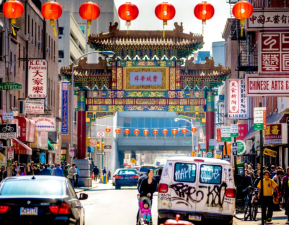
The clash between traditional culture and modern society has sparked much reflection on cultural inheritance and renewal. With globalization and modernization, we have witnessed the fusion and cross-border integration of many cultures. Should traditional culture remain conservative or closely integrate with modern society? Opinions differ on this issue. On the one hand, traditional culture is the crystallization of history and an important element showcasing the uniqueness of a nation and its people. Maintaining its unique traditional characteristics is crucial. On the other hand, modern culture is defined by its fast pace, diversity, and global reach; it also represents new challenges, new ideas, and new lifestyles.
The Coexistence of Tradition and Modernity
(1) "New and Old" in the Restoration of Notre Dame Cathedral
On April 15, 2019, a devastating fire ravaged Notre Dame Cathedral, a masterpiece of art with over 800 years of history. The roof was destroyed, the spire collapsed, leaving a scene of utter devastation that saddened the world. Following this disaster, the restoration of Notre Dame became a global focus, sparking a profound discussion about the integration of tradition and modernity.
During the restoration process, traditional craftsmanship and modern technology went hand in hand, contributing to the rebirth of Notre Dame Cathedral. The restoration team meticulously followed the original design drawings, employing ancient traditional techniques. To restore the cathedral's wooden structure, experts conducted in-depth research on the charred timber remains, determining the type, origin, and growing environment of the wood, and selecting over 1,000 suitable oak trees. These oaks were transported to various timber processing plants for preliminary treatment. Subsequently, a team of highly skilled carpenters used woodworking methods dating back to the 13th century, wielding traditional hand axes, mallets, and chisels to meticulously carve each piece of wood, striving to restore the historical architectural style as accurately as possible. When restoring the rose windows, craftsmen carefully inspected every step of the restoration under microscopes, solely to avoid damaging this precious work of art.
However, the introduction of modern design elements also sparked intense controversy. The reopened Notre Dame Cathedral features brighter interior lighting, and the white marble and clean stained glass windows make the entire space feel more spacious. Some believe this has given Notre Dame a fresh new look, as if it has returned to its original appearance; however, others criticize the modern design elements, arguing that they clash with the historical character and destroy the building's original rustic charm. The replacement of some 19th-century windows unaffected by the fire with modern stained glass has been particularly unacceptable to conservatives, who have denounced it as disrespectful to tradition and a "mad act."
Undeniably, the integration of modern elements has also brought new life and vitality to Notre Dame. The new lighting system allows for a more perfect display of the interior's artistic decorations, providing visitors with a completely new visual experience; the installation of advanced fire prevention and security systems has greatly improved the building's safety and reduced the risk of further disasters. This restoration is a profound dialogue between tradition and modernity, showing us that in the protection of cultural heritage, tradition and modernity are not irreconcilable contradictions, but rather can complement and promote each other, jointly writing a new chapter in history.
(2) The "Transformation" of the Spring Festival in Modern Society
The Spring Festival, the most important traditional festival of the Chinese nation, is like a surging cultural river, flowing with thousands of years of history and emotions. Originating from the ancient sacrificial rites to gods and ancestors in the Yin and Shang dynasties, it has gradually evolved into the grand festival celebrated by the entire nation today through the test of time. Throughout history, the customs of the Spring Festival have continuously enriched, from ancestor worship in the Han Dynasty, to visiting relatives and friends to exchange New Year's greetings and the invention of "New Year's greeting cards" in the Tang Dynasty, and then to the emergence of firecrackers in the Song Dynasty; its celebration methods have changed with the changing dynasties.
In modern society, the Spring Festival is like a trendsetter, actively embracing modern technology while inheriting traditional culture, constantly innovating and developing. In the past, setting off firecrackers was an indispensable ritual of the Spring Festival, the crackling sound symbolizing bidding farewell to the old year and welcoming the new. However, with the increasing awareness of environmental protection, electronic firecrackers have emerged, creating a festive atmosphere while being environmentally friendly. The ways of exchanging New Year's greetings have also undergone tremendous changes, from the past practice of visiting each household to today's video greetings and WeChat blessings, allowing warm wishes to be conveyed instantly even when separated by thousands of miles. New leisure activities and consumption scenarios, such as cross-border tourism, e-commerce, and holiday study tours, are constantly emerging, making the celebrations of the Spring Festival more diverse and colorful.
The cultural connotations of the Spring Festival are also constantly being refined with the development of the times. It has always been a warm moment for family reunion. No matter where they are, people will try their best to return home to reunite with their loved ones, share a reunion dinner, and reminisce about family ties. The Spring Festival has also become an important window for showcasing Chinese culture. With the rise of China's international influence, Spring Festival celebrations have taken root in many parts of the world. Customs such as pasting Spring Festival couplets, hanging lanterns, and dragon and lion dances are gradually being integrated into local cultures, becoming new folk customs. On December 4, 2024, "The Spring Festival – Chinese People's Social Practices of Celebrating the Traditional New Year" was successfully inscribed on UNESCO's Representative List of the Intangible Cultural Heritage of Humanity. This is not only a high recognition of the cultural value of the Spring Festival but also allows it to shine even brighter on the global stage. In modern society, the Spring Festival serves as a cultural bond, closely connecting the past, present, and future. It not only carries on the roots of the Chinese nation but also demonstrates its vitality in keeping with the times.